
Every gardener knows the feeling: you have a vision of a beautiful new flower bed or a vegetable patch, but the physical reality of moving bags of soil, heavy pots, and flats of plants stands in the way. This is where a high-quality wheelbarrow becomes not just a tool, but a necessity.
Whether you are landscaping a sprawling backyard or managing a cozy urban garden, choosing the right wheelbarrow can save your back and make your planting projects significantly more efficient. This guide covers everything you need to know to find the perfect hauling companion for your green space.
Why the Right Wheelbarrow Matters
A wheelbarrow is more than a bucket on wheels. When you are transporting delicate plants, you need stability to prevent tipping and damaging foliage. When you are hauling heavy compost to feed those plants, you need balance to prevent strain on your arms and lower back. The “right” choice depends entirely on your specific gardening needs, terrain, and physical strength.
Key Features to Consider (Informational)
Before you buy, it is crucial to understand the different features available. Here is what you need to look for when shopping for a plant-friendly wheelbarrow.
1. Material: Plastic vs. Steel
This is the biggest debate in the world of garden carts.
- Plastic (Poly): These are lightweight, rust-proof, and usually cheaper. They are excellent for moving plants, mulch, and soft soil. Because they are lighter, they are easier to lift and dump. However, they can crack if left in the freezing cold or if you drop heavy rocks into them.
- Steel: The traditional choice. Steel is incredibly durable and can handle heavy loads like bricks or large stones without flexing. However, they are heavier to push and can rust if left out in the rain.
- Verdict for Plants: A heavy-duty plastic (poly) tray is often best for plants because it resists corrosion from wet soil and fertilizers and is lighter to maneuver around flower beds.
2. Wheel Configuration: One vs. Two
- Single Wheel: The classic design. It offers superior maneuverability, allowing you to pivot quickly and navigate tight corners or narrow garden paths. However, it requires more strength to balance, especially with uneven loads.
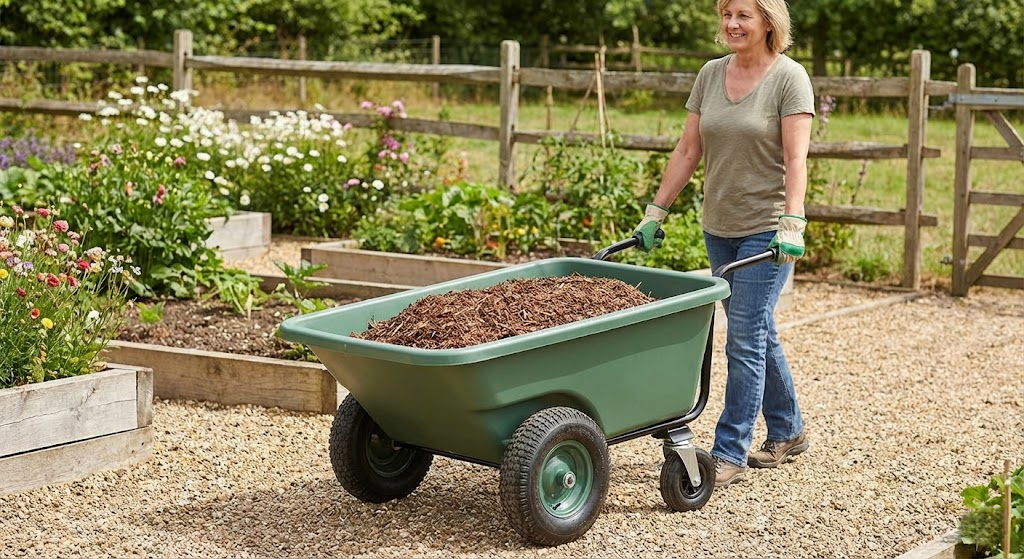
- Two Wheels: These provide maximum stability. You are far less likely to tip a two-wheeled barrow over, which is a huge plus when carrying tall, top-heavy potted plants. The trade-off is that they are harder to turn on a dime.
3. Tire Type
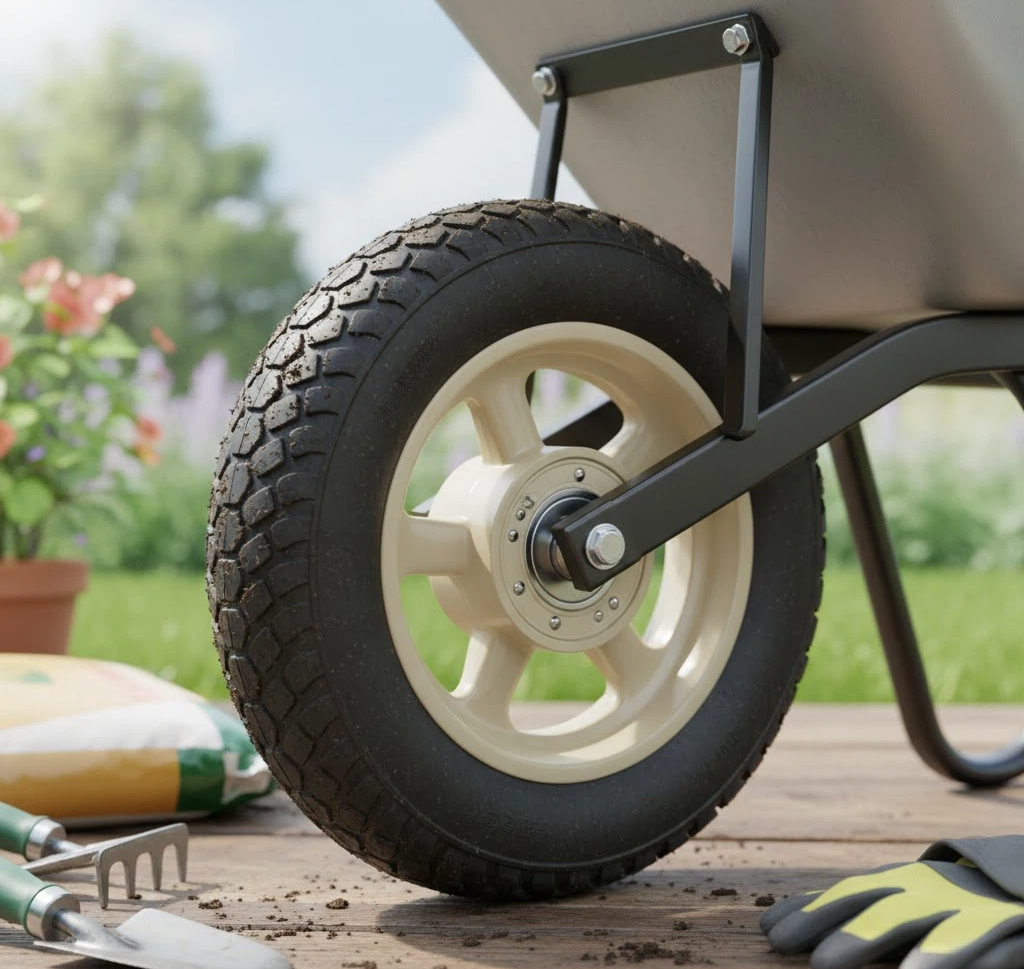
- Pneumatic (Air-filled): These act like shock absorbers. If you have bumpy terrain, rocks, or roots, air-filled tires will give your plants a smoother ride, preventing them from bouncing out.
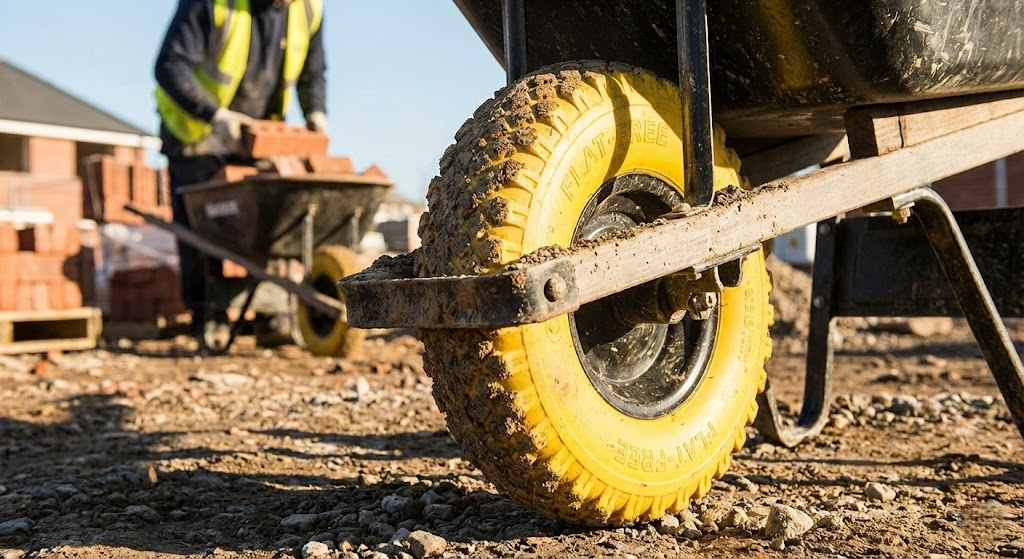
- Flat-Free (Solid): You will never have to worry about a flat tire, which is great for low maintenance. However, the ride is rougher.
Top Wheelbarrow Categories (Transactional)
Based on common gardening needs, here are the types of wheelbarrows you should consider adding to your shed.
The All-Rounder: 6-Cubic Foot Poly Wheelbarrow
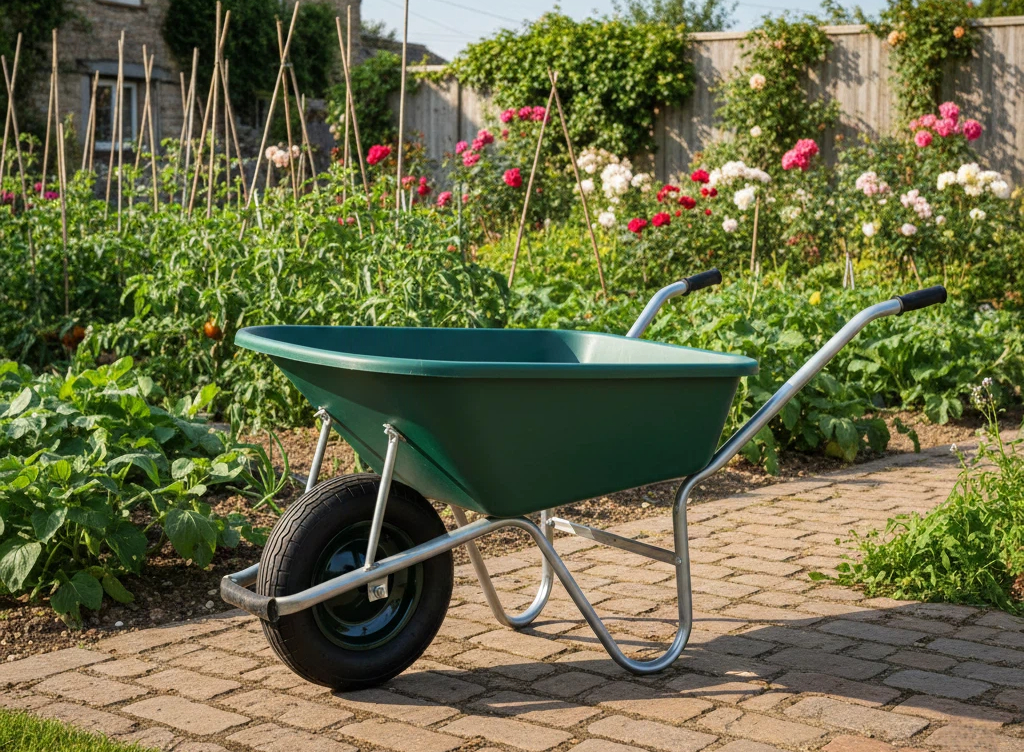
For most home gardeners, a standard 6-cubic foot wheelbarrow with a poly tray and a single pneumatic tire is the “Goldilocks” option. It is large enough to carry several bags of mulch or a mid-sized tree ball, but small enough to fit through standard gates. Look for one with ergonomic handles to reduce wrist strain.
The Heavy Hauler: Dual-Wheel Steel Cart
If you are moving large terracotta pots or heavy bags of gravel for drainage, a two-wheeled steel cart is ideal. The dual wheels bear the weight for you, meaning you simply push rather than lift-and-push. This is the best choice for gardeners who want to minimize back strain.
The Compact Carrier: Garden Carts and Wagons
Sometimes a traditional wheelbarrow is overkill. If you are strictly moving flats of seedlings, tools, or small pots, a four-wheeled garden wagon might be better. They are incredibly stable and easy to pull, though they cannot dump loads as easily as a barrow.
People Also Ask (FAQ)
What is the best size wheelbarrow for a home garden? A 6-cubic foot capacity is the standard for home gardens. It offers a good balance between carrying capacity and maneuverability. Smaller 4-cubic foot models are good for light weeding, while 8-cubic foot models are generally reserved for commercial landscaping.
Is a plastic or metal wheelbarrow better for gardening? For general gardening and planting, plastic (poly) is usually better. It is lighter, doesn’t rust when exposed to wet soil or rain, and is easier to clean. Metal is superior only if you are moving sharp rocks or construction debris.
Can I leave my wheelbarrow outside? It is best to store your wheelbarrow in a shed or garage. If you must leave it outside, store it upside down (to prevent water from pooling in the tray) and cover it with a tarp to protect the handles and tires from sun damage.
How do I stop my wheelbarrow from tipping over? tipping usually happens due to overloading or uneven terrain. To prevent this, center your load over the wheel axle rather than near the handles. If stability is a major concern, opt for a two-wheeled model.
Conclusion
Investing in the right wheelbarrow for plants is an investment in your gardening enjoyment. By assessing your terrain and the typical weight of your loads, you can choose a tool that acts as a helpful partner rather than a heavy burden. Whether you choose a nimble single-wheel poly barrow or a sturdy steel cart, your back (and your plants) will thank you.