
Introduction: The Stability Game Changer
Every gardener or DIY enthusiast knows the pain: you’ve loaded your barrow with 200 pounds of mulch or rocks, you hit a soft patch of grass, and suddenly the whole thing tips sideways. The solution to this common headache is simple but effective: the double wheelbarrow.
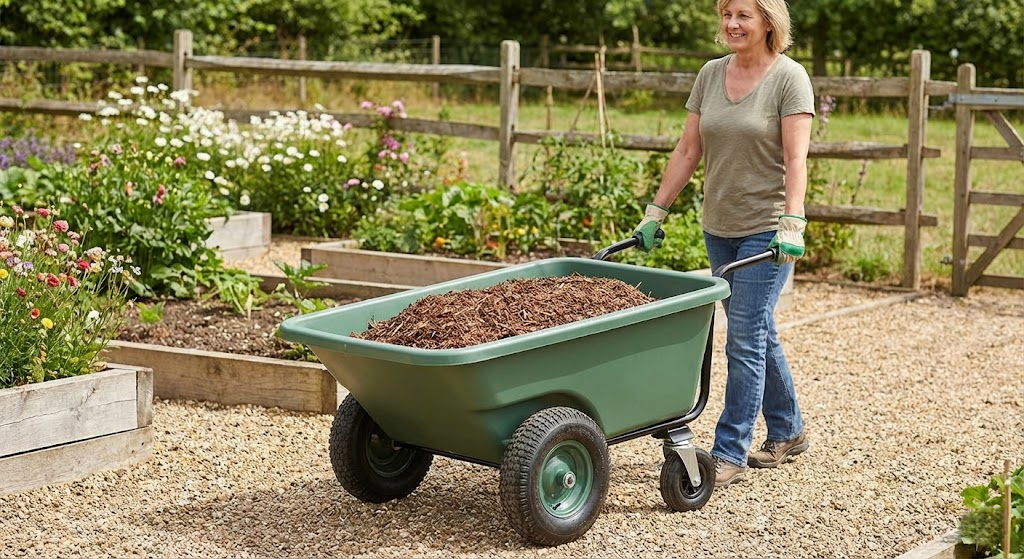
Unlike the traditional single-wheel design that requires a constant balancing act, a double-wheel wheelbarrow (often called a dual-wheel cart) offers superior stability and weight distribution. In this guide, we’ll explore why making the switch might be the best thing you do for your back and your workflow.
Double vs. Single Wheelbarrow: The Comparison
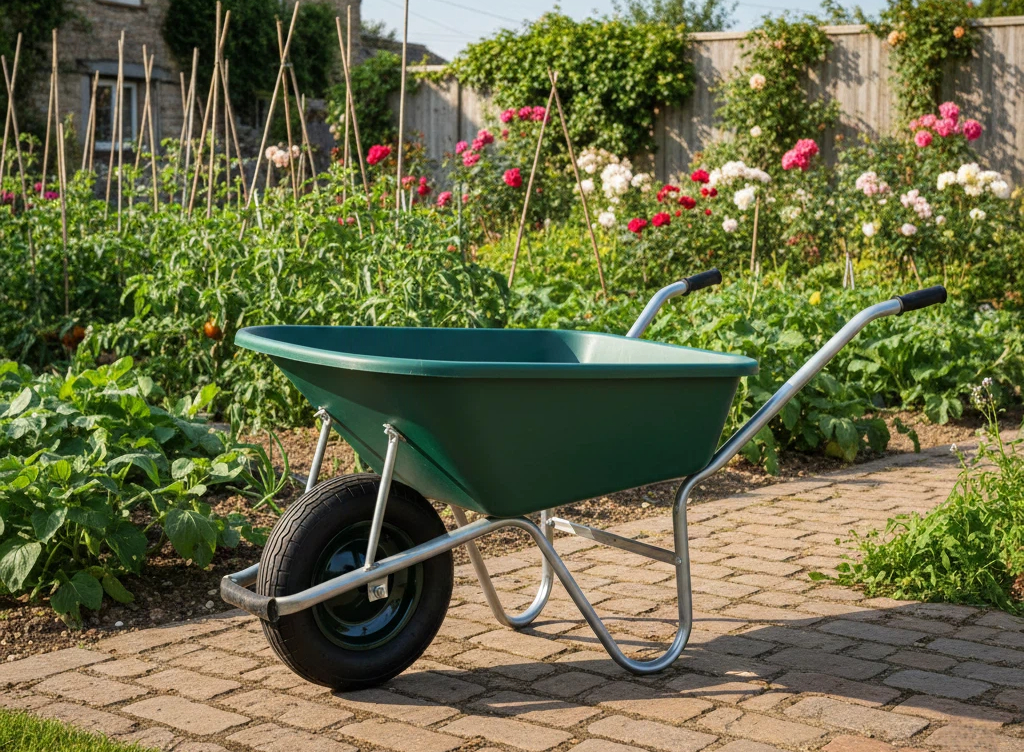
When choosing between a classic single wheelbarrow (like the Jackson 6 cu. ft. Steel Contractor Barrow) and a double, it ultimately comes down to agility vs. stability.
- 单轮: Great for tight turns and pivoting. It can navigate narrow plank ramps or slalom through crowded garden beds. However, it requires significant upper body strength to balance heavy loads.
- Double Wheelbarrow: The clear winner for heavy loads on uneven ground. While it has a wider turning radius, it does not tip over easily. You can often let go of the handles momentarily, and it stays upright.
Quick Comparison:
| 特征 | Single Wheel | Double Wheel |
| Stability | Low (Tips easily) | High (Self-balancing) |
| Maneuverability | Excellent (Zero-turn) | Good (Wider turns) |
| Weight Capacity | Lower | Higher (Better distribution) |
| Physical Effort | High (Lift + Balance) | Medium (Push only) |
Top Benefits of a Dual-Wheel Design
Why are landscapers and seniors increasingly switching to double wheels?
- Reduced Back Strain: Because the two wheels support the balance, you don’t have to engage your core constantly to prevent tipping.
- Easier Dumping: Many dual models, like the popular Gorilla Carts Poly Dump Cart, feature a “roll-over” bar or quick-release dumping mechanism that makes tipping the load forward controlled and easy.
- Terrain Mastery: Two wheels float better over soft mud, sand, or gravel where a single wheel might sink and get stuck.
Video Comparison: Seeing the Difference
Sometimes you have to see it to believe it. Watch this side-by-side demonstration showing how a double wheelbarrow handles a heavy load compared to a standard barrow.
Buying Guide: What to Look For
If you are ready to upgrade your garden tools, keep these three factors in mind before clicking “buy”:
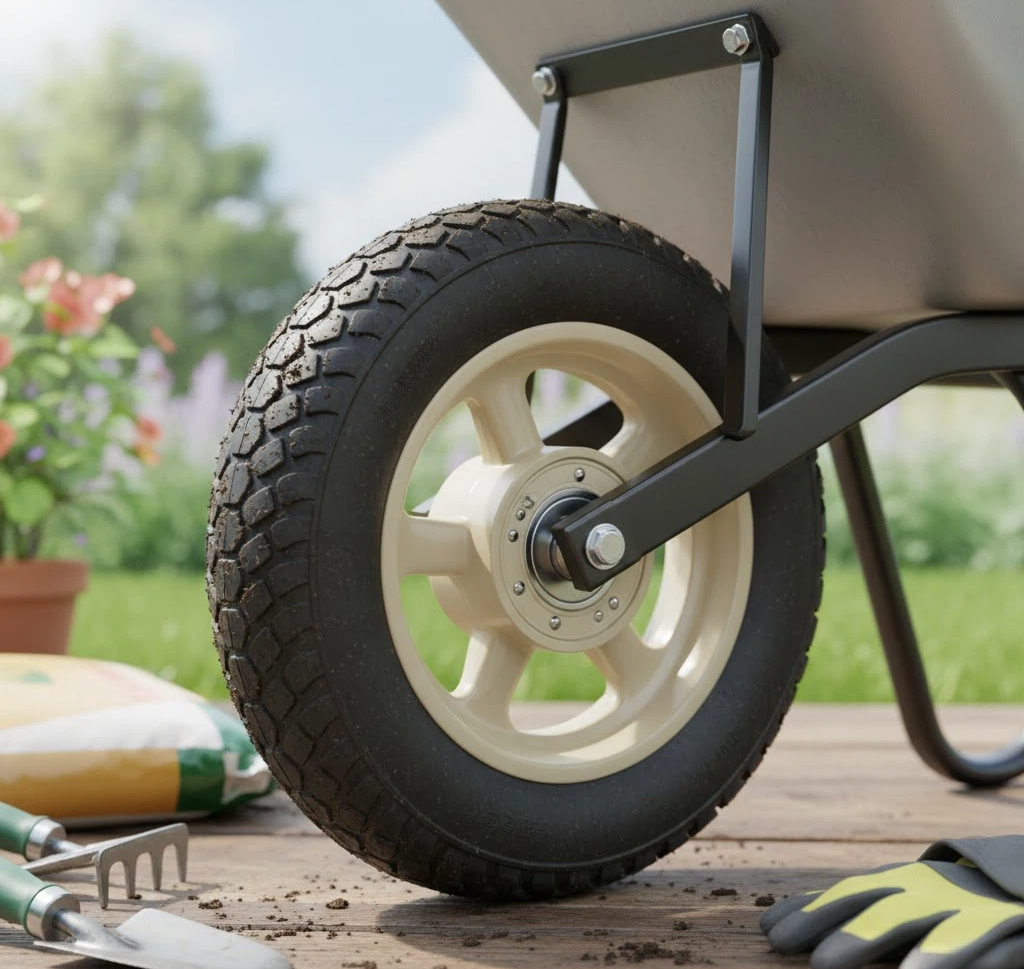
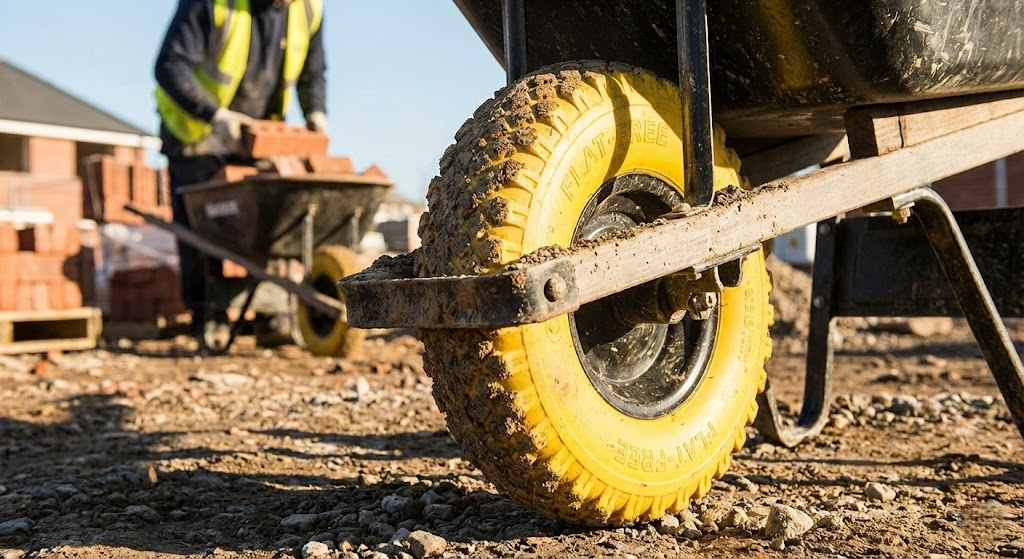
- Tires (Pneumatic vs. Flat-Free): Pneumatic (air-filled) tires offer the smoothest ride over bumps but risk punctures. We recommend upgrading to Marathon Flat-Free Universal Fit Tires so you never open your shed to find a flat tire.
- Tray Material:
- 钢: Best for construction and heavy rocks. Durable but can rust if left outside.
- 聚合物(塑料): Lighter, rust-proof, and usually best for mulch, compost, and general gardening. The Marathon Yard Rover is the gold standard here.
- Handle Ergonomics: Look for loop handles (common on carts) which allow for pushing or pulling with one hand, rather than the traditional two-straight-handles design.
常见问题解答 (FAQ)
Is a 2-wheel wheelbarrow better? For most homeowners, yes. The added stability makes it safer and easier to use for moving heavy loads like soil, gravel, or firewood without the risk of tipping sideways.
Are dual-wheel wheelbarrows hard to turn? They require a slightly wider turning radius than a single-wheel barrow. You cannot pivot on a dime, but the trade-off for stability is usually worth it for straight-line hauling.
Can you convert a single wheelbarrow to a double? Yes, there are conversion kits available that allow you to add an axle and a second wheel to a standard wheelbarrow, though buying a purpose-built dual cart is often more durable and cost-effective.
Conclusion
Upgrading to a double wheelbarrow transforms heavy yard work from a balancing act into a simple push-and-dump operation. Whether you choose a large steel model for construction or a poly cart for gardening, your back will thank you.
Explore Related Topics: