
Introduction
There are few things more frustrating than gearing up for a weekend of yard work, only to find your wheelbarrow has a flat tire. It stops your project dead in its tracks. If you are looking for a replacement, a Home Depot wheelbarrow tire is likely on your radar due to the convenience and variety the retailer offers.
Whether you are hauling heavy rocks, mulch, or mixing concrete, the right tire makes all the difference. This guide explores the best options available at Home Depot, how to choose between air-filled and flat-free models, and answers the most common questions about installation.
Pneumatic vs. Flat-Free: Which is Right for You?
Before you head to the aisle, you need to decide on the type of tire. Most Home Depot wheelbarrow tire inventory falls into two main categories:
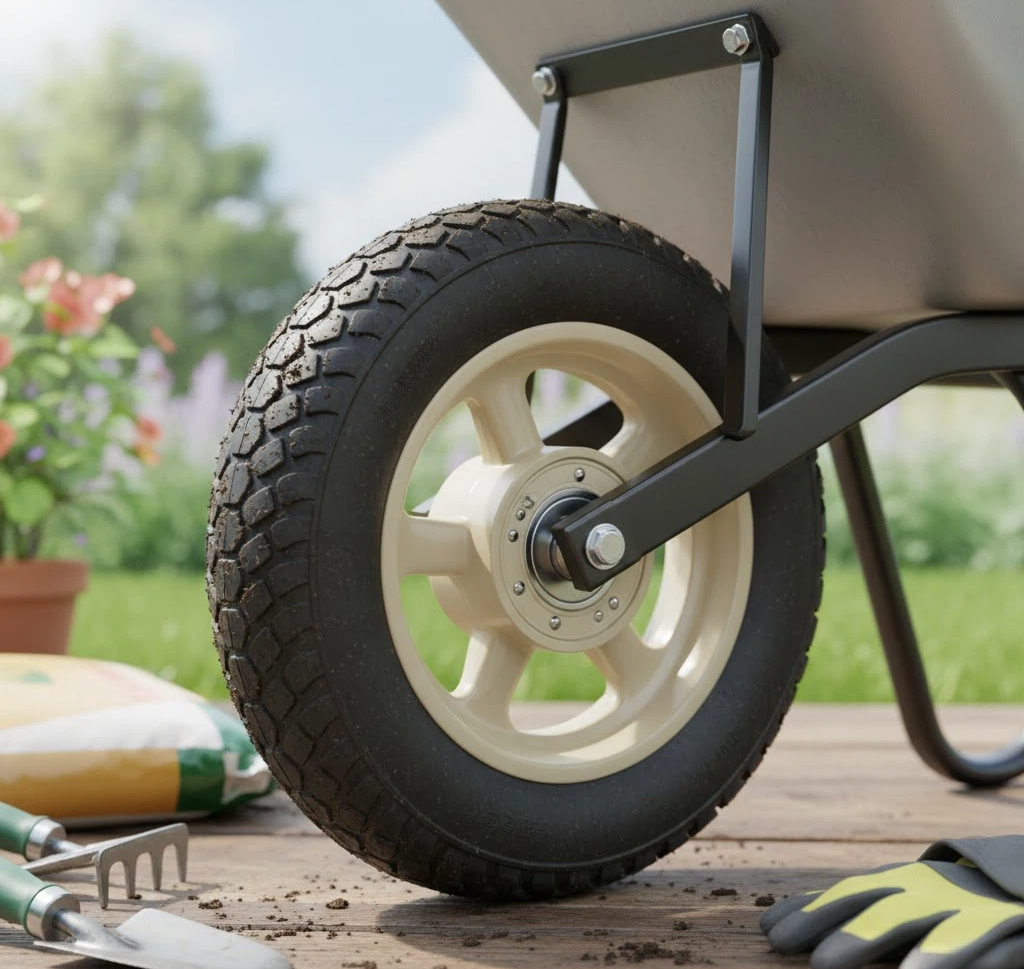
1. Pneumatic (Air-Filled) Tires These are traditional tires similar to what you find on a bicycle or car.
- Pros: They offer the smoothest ride and best shock absorption. If you are hauling delicate items or traversing very bumpy terrain, the air cushion helps stabilize the load.
- Cons: They are prone to punctures from thorns, nails, and glass. They also lose pressure over time and require maintenance.
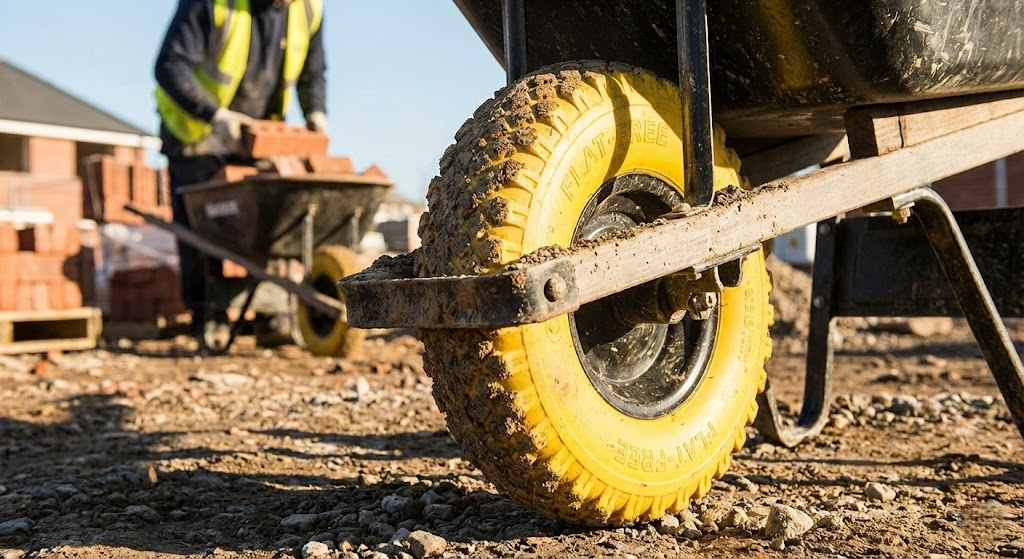
2. Flat-Free (Solid Polyurethane) Tires These have become the industry standard for homeowners who want low maintenance. They look like rubber but are made of a solid foam material.
- Pros: They never go flat. You can run over a bed of nails and keep rolling. They are weather-resistant and don’t rot as quickly as rubber.
- Cons: The ride is stiffer. You might feel more bumps compared to an air-filled tire, though newer models have improved significantly in this area.
Top Rated Home Depot Wheelbarrow Tires
Based on popularity, durability, and customer satisfaction, here are the top replacements you can find on the shelves.
The Best All-Around: Marathon Flat-Free Universal Wheelbarrow Tire This is arguably the most popular replacement tire available. The Marathon tire is designed to fit most standard wheelbarrows. It typically comes with a variety of spacers and bushings, making it a “universal” fit for axles of different sizes.
- Why it wins: It eliminates the “will it fit?” anxiety for most buyers. The flat-free design means you never have to pull out an air compressor before gardening again.
The Heavy-Duty Choice: Gorilla Flat-Free Tire If you own a Gorilla Cart or need something that feels a bit more robust, the Gorilla branded tires are a top contender. They often feature a slightly wider tread pattern, which provides better traction in mud and loose soil compared to standard tires.
- Best for: Heavier loads and construction-type environments where stability is key.
The Budget Pick: Standard Pneumatic Replacements If you are strictly budget-conscious and don’t mind the occasional maintenance, Home Depot offers standard air-filled replacements (often under the Anvil or unbranded lines). These are cost-effective but will require you to check the air pressure seasonally.
Buying Guide: How to Ensure the Right Fit
Don’t guess when buying a replacement. Check these three specs on your old tire before driving to the store:
- Tire Diameter: The most common sizes are 13-inch, 14.5-inch, and 16-inch. This is usually printed on the sidewall of your old tire.
- Axle Diameter: This is the size of the metal rod the tire spins on. Standard sizes are usually 5/8″ or 3/4″. Universal kits at Home Depot usually include adapters for both.
- Hub Length: This is the width of the tire right at the center hole. If your new tire’s hub is too short, the wheel will slide side-to-side. (Tip: You can use the spacers included in universal kits to fill this gap).
Step-by-Step Installation Guide
Replacing a wheelbarrow tire is a 10-minute job if you have the right tools.
Tools Needed:
- Adjustable wrench or socket set
- Flathead screwdriver (if prying off axle caps)
- Grease (optional, for smoother spinning)
The Process:
- Flip it: Turn your wheelbarrow upside down so it is stable.
- Loosen the Brackets: Locate the two brackets holding the axle to the frame. Loosen the bolts just enough so the axle can slide out. You usually don’t need to remove them completely.
- Remove the Old Tire: Slide the axle out and remove the old wheel. Keep your old spacers just in case you need them.
- Prep the New Tire: Insert the correct bearings/bushings into your new tire to match your axle thickness.
- Install: Slide the axle through the bracket, then a spacer, then the wheel, then another spacer, and finally through the second bracket.
- Tighten: Secure the bracket bolts. Spin the wheel to ensure it moves freely and doesn’t wobble.
People Also Ask (FAQ)
Q: Do Home Depot wheelbarrow tires come with an axle? A: generally, no. Most replacement tires are the wheel assembly only. You are expected to reuse your existing metal axle rod. If your axle is bent or broken, you may need to buy a separate hardware kit.
Q: Can I put a larger tire on my wheelbarrow? A: It is not recommended. A larger tire might rub against the front of the tray or the frame. Stick to the size printed on your original tire (e.g., if you had a 14.5″ tire, buy a 14.5″ replacement).
Q: Are flat-free tires worth the extra money? A: For most homeowners, yes. The price difference is usually $10-$20, but the time saved from not repairing flats or buying new tubes typically pays for itself within a year or two.
Q: How do I dispose of my old wheelbarrow tire? A: Rubber tires should not be thrown in the regular trash. Check with your local recycling center or a local tire shop; many will recycle them for a small fee.
Conclusion
Upgrading your Home Depot wheelbarrow tire is one of the easiest ways to extend the life of your garden tools. While the upfront cost of a flat-free tire is slightly higher, the reliability it offers is unmatched. By measuring your hub and axle beforehand, you can ensure a perfect fit and get back to your projects without the headache of a deflated tire.