
There is nothing more frustrating than gearing up for a day of gardening or construction work, only to find your wheelbarrow has a flat tire. You’re left with two bad options: halt your project to drive to the hardware store, or struggle with a hand pump that never quite seals the bead.
This is why solid wheelbarrow tires have become the upgrade of choice for homeowners and contractors alike. By eliminating air completely, these tires offer a “set it and forget it” solution that ensures your equipment is ready whenever you are.
In this guide, we will break down everything you need to know about solid tires, how they compare to traditional air-filled options, and how to choose the perfect replacement for your cart.
What Are Solid Wheelbarrow Tires?
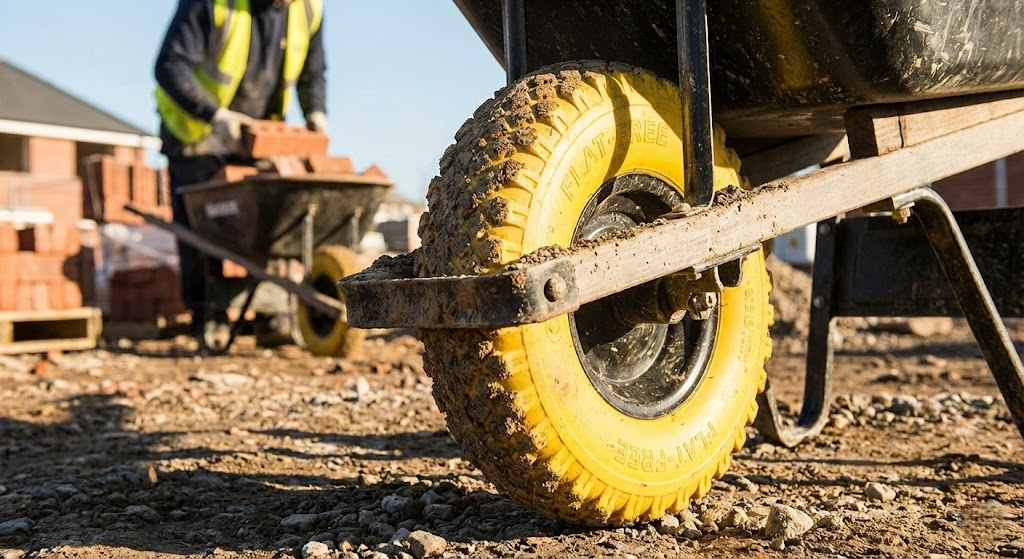
Solid wheelbarrow tires (often called “flat-free” tires) are non-pneumatic wheels designed to mimic the bounce and feel of air-filled tires without the risk of punctures. They are typically made from lightweight, micro-cellular polyurethane foam or solid rubber.
Unlike traditional tires that rely on an inner tube and air pressure to support a load, solid tires rely on the density of the material itself. This means they are immune to nails, glass, thorns, and the dry-rot that plagues standard rubber tires left out in the sun.
Solid vs. Pneumatic Tires: The Showdown
Before you make the switch, it is important to understand how solid tires stack up against the traditional pneumatic (air-filled) ones. While solid tires are the king of durability, there are trade-offs to consider regarding comfort and terrain.
The Case for Solid Tires
- Zero Maintenance: No pumps, no patches, and no pressure checks.
- Indestructible: You can roll over roofing nails, scrap metal, and thorny vines without issue.
- Consistent Performance: The tire shape remains constant under heavy loads, preventing the “wobbly” feeling of a low-air tire.
- Long Lifespan: High-quality polyurethane resists UV damage and cracking better than standard rubber.
The Trade-Offs
- Rougher Ride: Because there is no air cushion, solid tires transfer more vibration to your hands, especially over rocky or uneven ground.
- Heavier Push: On soft surfaces like mud or deep sand, solid tires can sometimes sink or feel harder to push compared to a properly inflated pneumatic tire.
Key Benefits of Upgrading
Why are so many people swapping their factory wheels for solid wheelbarrow tires?
- Reliability on Job Sites: For contractors, time is money. A flat tire on a job site causes downtime. Solid tires guarantee that the wheelbarrow is always operational.
- Safety: A sudden blowout while carrying a heavy load of bricks or concrete can lead to injury. Solid tires eliminate the risk of explosive decompression.
- Cost-Effective Over Time: While a solid tire might cost slightly more upfront than a replacement tube, you will never have to buy a patch kit or replacement tube again.
Buying Guide: How to Choose the Right Tire
Not all solid wheelbarrow tires are universal. To ensure you buy the correct replacement, you need to measure your current setup accurately.
1. Check the Tire Diameter
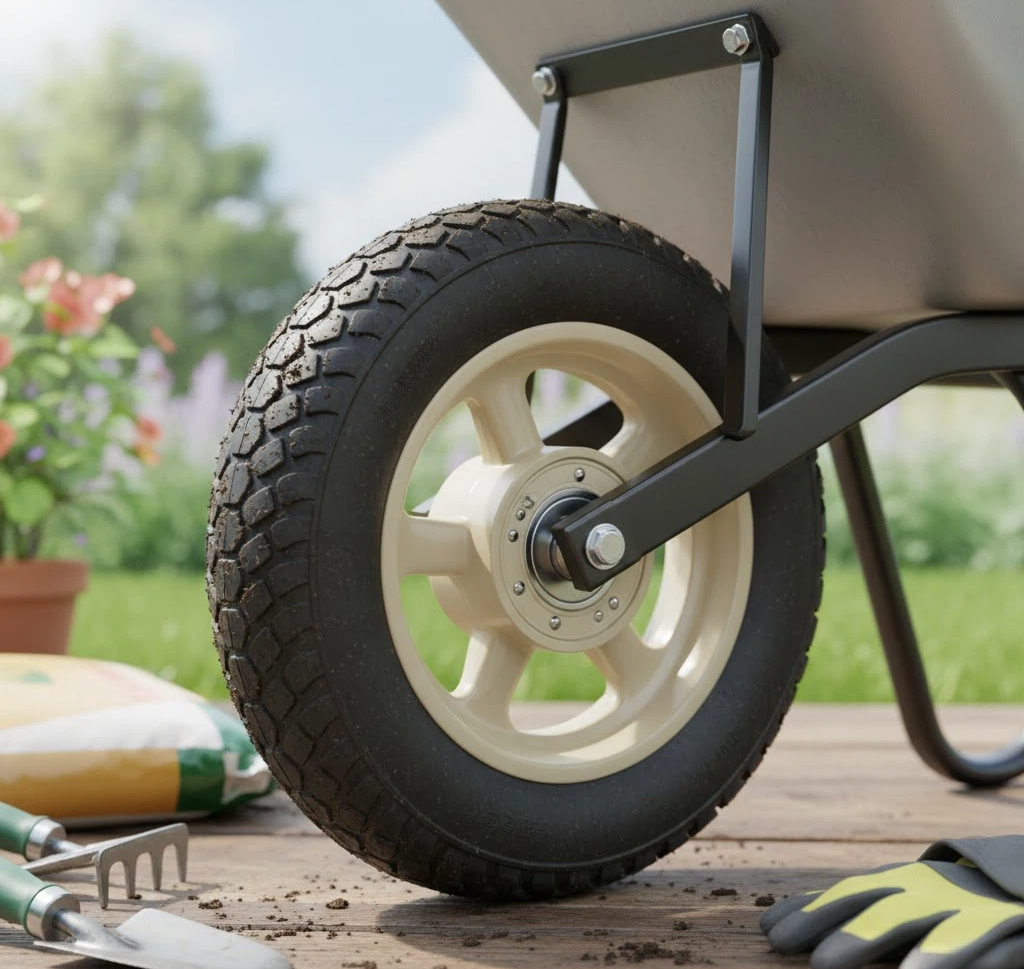
The most common sizes for wheelbarrow tires are roughly 13 inches to 16 inches in total diameter. Check the sidewall of your old tire for numbers like “4.80/4.00-8” (which indicates the tire width and rim diameter) to find a match.
2. Measure the Hub Length
This is the most critical step. The hub is the center tube where the axle slides through.
- Measure the width of the hub from one side of the wheel to the other.
- Common sizes include 3 inches, 4 inches, or 6 inches.
- Tip: Many universal solid tires come with spacers (plastic or metal washers) that allow you to adjust the hub length to fit your specific wheelbarrow fork.
3. Axle Diameter (Bore Size)
Measure the thickness of your axle. The standard standard is usually 5/8 inch or 3/4 inch. Most replacement solid tires come with bearings for a 5/8″ axle but include adapters or ball bearings to fit 3/4″ axles.
4. Tread Pattern
- Ribbed Tread: Best for smooth surfaces like pavement or warehouse floors. It offers low rolling resistance.
- Knobby/Turf Tread: Best for gardens, dirt, and gravel. The knobs provide traction to prevent the wheel from sliding on wet grass or loose soil.
Installation: A 5-Minute Upgrade
Swapping to a solid tire is one of the easiest DIY tasks you can perform.
- Flip the Wheelbarrow: Turn the wheelbarrow upside down so the wheel is facing up.
- Remove the Brackets: Loosen the bolts on the axle brackets (often held by two bolts on the frame).
- Slide Out the Old Wheel: Remove the old wheel and slide the axle out of the hub.
- Prep the New Wheel: If your new solid tire came with spacers or different bearings, configure them to match your axle size and hub width.
- Reassemble: Slide the axle through the new wheel, place it back onto the frame, and tighten the brackets. Ensure the wheel spins freely before tightening everything down fully.
Frequently Asked Questions (FAQ)
Do solid wheelbarrow tires develop flat spots? High-quality polyurethane tires are resistant to flat-spotting. However, if you leave a wheelbarrow loaded with heavy bricks in one spot for months, temporary flat spots can occur. It is best to store the wheelbarrow unloaded.
Can I use solid tires on loose sand? You can, but they may be harder to push than pneumatic tires. Pneumatic tires can be slightly deflated to “float” over sand, whereas solid tires maintain a rigid shape that can dig in.
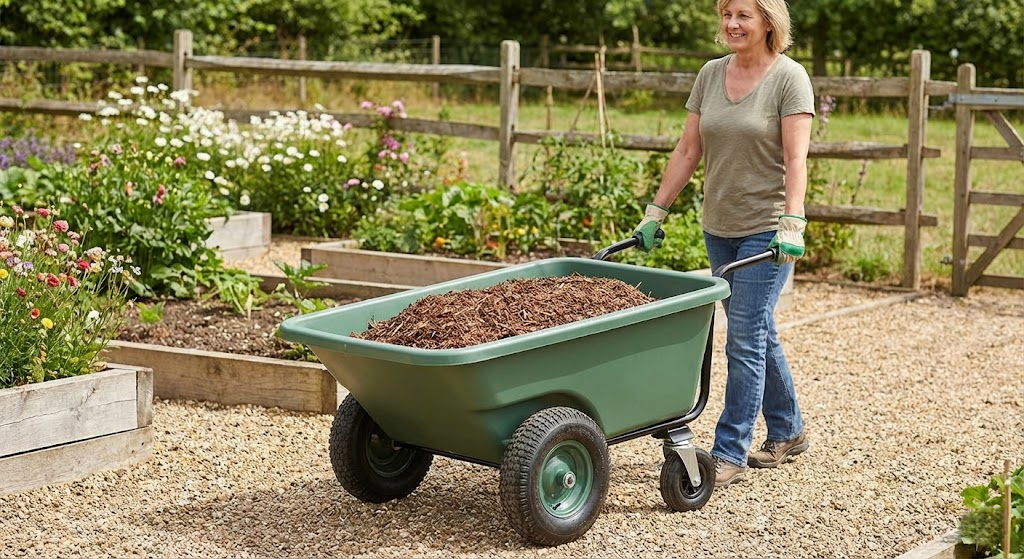
Are these tires compatible with garden carts? Yes, many solid tires are designed to fit both wheelbarrows and garden carts. Just ensure you match the hub length and axle diameter of your specific cart model.
Conclusion
If you are tired of the cycle of pumping, patching, and replacing inner tubes, switching to solid wheelbarrow tires is the smartest investment you can make for your garden or construction tools. While they offer a slightly firmer ride, the peace of mind knowing your wheelbarrow is always ready to roll is worth every penny. Measure your hub, pick your tread, and say goodbye to flats forever.