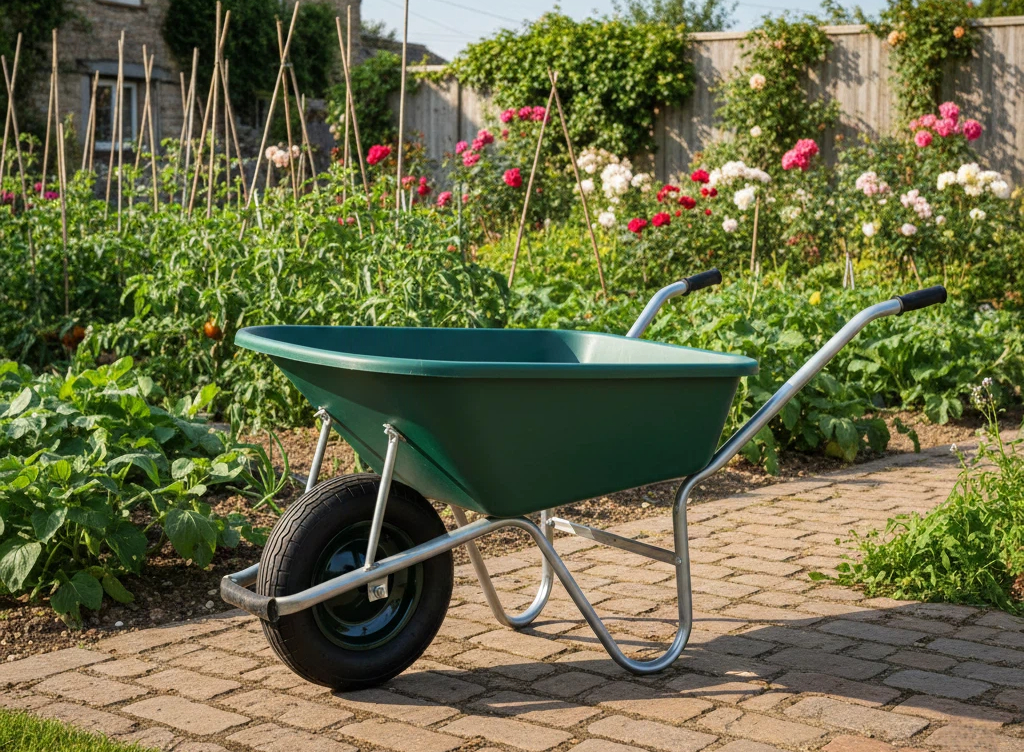

When you think of a wheelbarrow, you probably picture a small garden cart with a wheel at the very front, requiring you to lift half the heavy load yourself. But nearly two thousand years ago, during the Han Dynasty, Chinese engineers developed a “super machine” that could carry six times as much weight, transport passengers, and even harness the wind.
Known in legends as the “Wooden Ox,” this innovation revolutionized military logistics and daily life in ancient China. In this deep dive, we explore the history, the superior mechanics, and the enduring legacy of the Han Dynasty wheelbarrow.
The Origins: A Military Secret?
While simple carts existed earlier, the true single-wheeled barrow is widely believed to have been perfected during the Han Dynasty (206 BC – 220 AD). Historical texts point to the period around 230 AD and the famous strategist Zhuge Liang.
According to the Records of the Three Kingdoms, Zhuge Liang invented the “Wooden Ox and Gliding Horse” to transport supplies to his army across the rugged, mountainous terrain of the Shu kingdom. Unlike horse-drawn carts that required wide roads, these single-wheeled vehicles could navigate narrow footpaths, allowing the Shu army to move tons of grain quickly and secretly.
While the “Wooden Ox” is often shrouded in myth, archaeological reliefs from Han tombs confirm that single-wheeled carts were in use by the second century—a full millennium before the wheelbarrow appeared in Europe.
Chinese vs. Western Wheelbarrows: A Tale of Two Designs
The most striking difference between the Han dynasty wheelbarrow and the modern Western version is the placement of the wheel. This simple design choice completely changes the physics of the tool.
The Western Design (Front-Mounted)
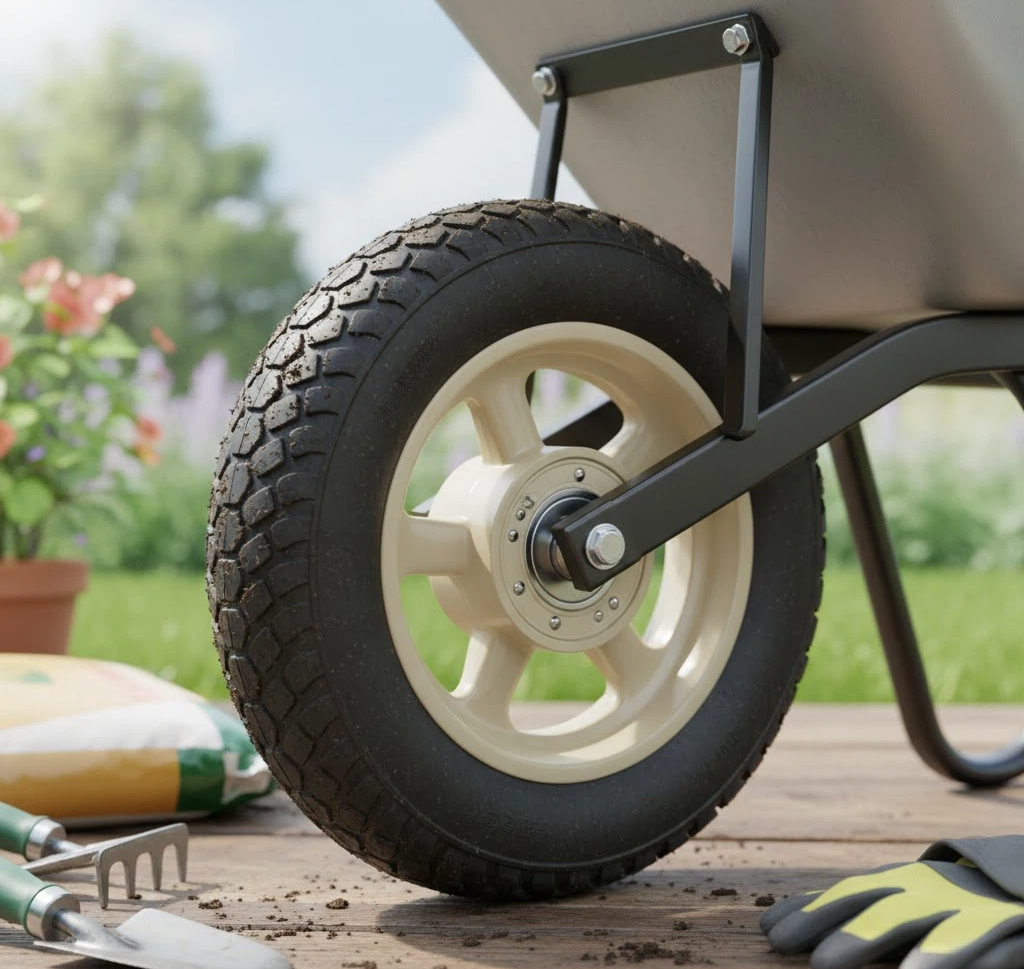
In the traditional Western wheelbarrow (developed in the 12th century), the wheel is at the front. This creates a second-class lever where the load is distributed between the wheel and the operator.
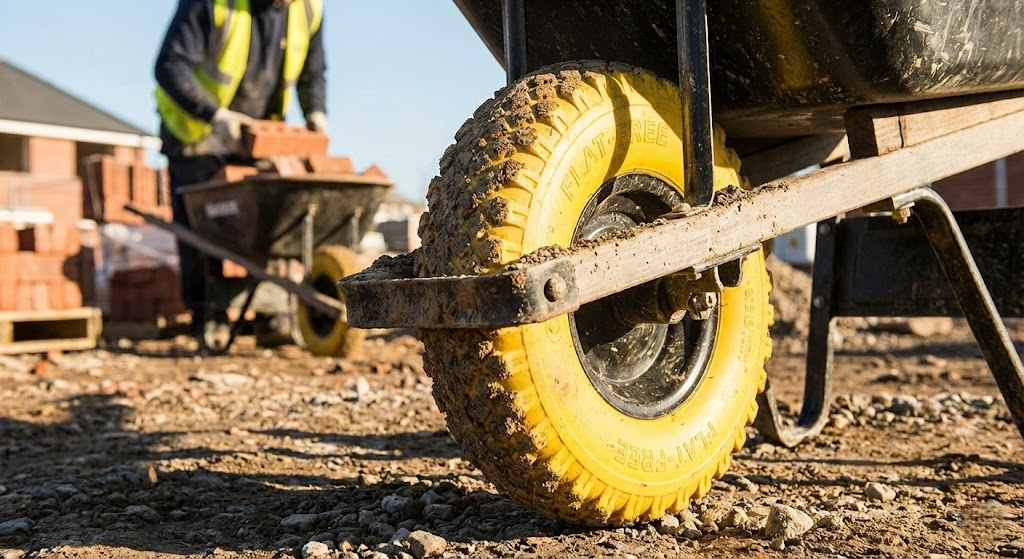
- The Flaw: If you are hauling 100 lbs of bricks, you might be lifting 50 lbs of that weight yourself.
- The Use: It is excellent for short trips and dumping loads (like dirt) quickly.
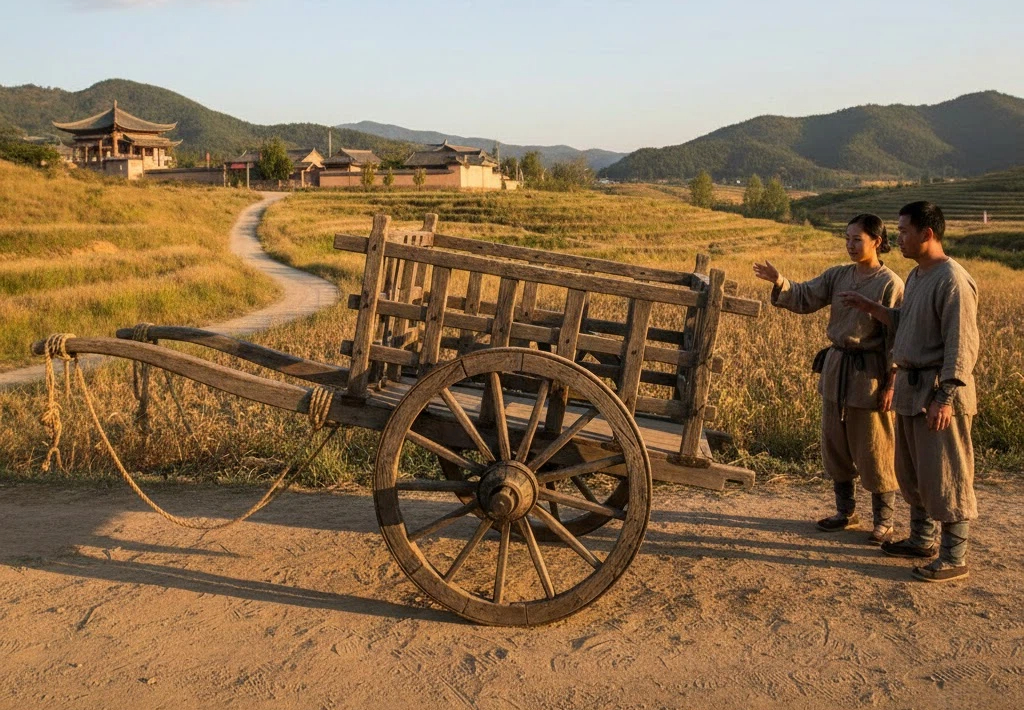
The Han Design (Center-Mounted)
The Chinese design placed a large wheel directly in the center of the frame. The cargo was packed around the upper half of the wheel on a wooden framework.
- The Advantage: The wheel bears almost 100% of the weight. The operator only needs to balance and steer the cart, rather than lift it.
- The Result: A single person could transport hundreds of pounds of cargo, or even up to six passengers, over long distances without exhaustion.
Powered by Wind: The “Land Ship”
Perhaps the most ingenious adaptation of the Han wheelbarrow was the addition of sails. Because the large central wheel minimized friction and the weight was perfectly balanced, Chinese farmers discovered they could attach a cloth sail to the framework.
When the wind was favorable, these “land ships” could travel at considerable speeds across the open plains, further reducing the effort needed by the operator. This unique feature stunned European travelers in later centuries, who had never seen wind power used for personal ground transport.
Impact on Society and Warfare
The efficiency of this central-wheel design had a massive impact on Chinese society:
- Military Superiority: Armies could move supplies without needing thousands of oxen, which themselves require food and water.
- Public Transport: In cities and rural areas, wheelbarrows served as taxis (or “sedan chairs on wheels”), carrying people comfortably.
- Infrastructure: Because the wheelbarrow required only a narrow track, China did not need to build the massive, wide paved roads that the Roman Empire required for their two-wheeled chariots and wagons. A narrow stone path was sufficient for a heavy trade route.
Frequently Asked Questions
Who invented the wheelbarrow? While the exact inventor is lost to time, the general Zhuge Liang (181–234 AD) is credited in folklore with perfecting the design for military use, creating the “Wooden Ox” to supply his troops.
Why was the Chinese wheelbarrow better than the European one? The Chinese “center-mount” design allowed the wheel to carry the full weight of the load. This meant a human operator could move three to six times more weight than they could with a European “front-mount” wheelbarrow, which requires the operator to lift half the load.
What is the “Wooden Ox and Gliding Horse”? These are legendary transport devices mentioned in the Romance of the Three Kingdoms. Most historians believe they were early, highly efficient forms of the wheelbarrow used for stealthy military transport.
Did Chinese wheelbarrows really use sails? Yes. Because of the low friction and balance of the central wheel, operators often attached masts and sails to harness the wind, making long-distance travel even easier.